What Makes Satisfying Valorant Clips So Addictive to Watch?
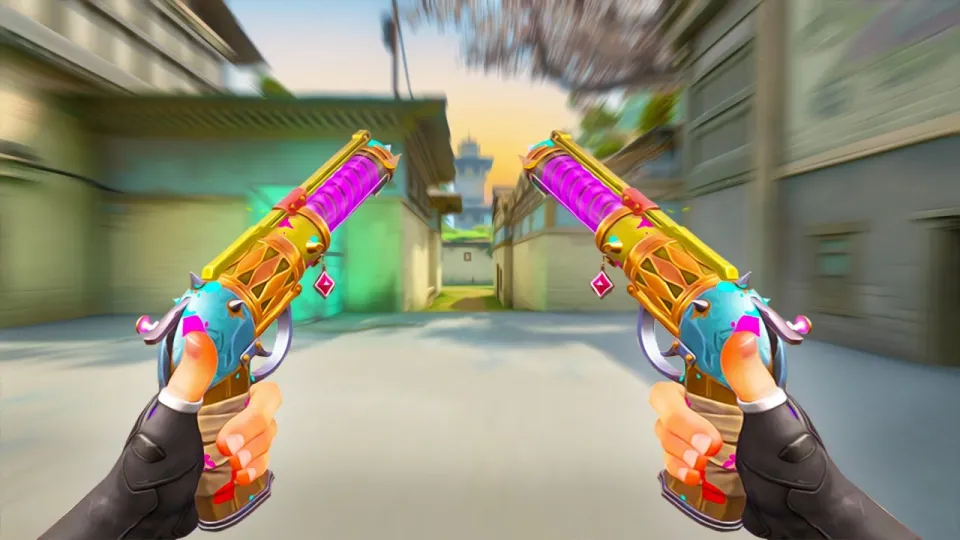
Video: 20 Minutes of Satisfying Valorant Clips
You can order the same kind of articles for your own video to boost it on YouTube and Google. Just message the Telegram bot @sat_sit_bot. It writes articles around your video, embeds the video and publishes them on popular niche websites (no ads). Your first 50 articles are free.
· based on the channel Rawzu
Key takeaways
- Rawzu's settings: 400 DPI, 0.625 sensitivity, 1440x1080 resolution, crosshair 1-6-2-2.
- Watch live daily at https://kick.com/rawzu.
- Phoenix kit: Blaze wall, Curveball blind, Hot Hands, Run it Back ultimate.
- The 20-minute satisfying compilation was published on 18.01.2025 by Rawzu.
- Common viewer themes: movement speed, one-taps, and custom-game economy.
Satisfying Valorant clips are addictive because they compress the game's highest-skill moments — one-taps, movement, and ability combos — into short, repeatable bursts of clarity that are easy to rewatch. Rawzu's 20-minute compilation, published on 18.01.2025, is a strong example: it strings together Phoenix duels, clean crosshair placement, and commentary that turns routine ranked plays into a highlight reel. If you want to watch the source material live, Rawzu streams daily at kick.com/rawzu.
Why do satisfying Valorant clips hold attention so well?
Satisfying clips work because they remove downtime and leave only the payoff. A normal ranked match is mostly rotations, economy decisions, and waiting; a highlight compilation keeps the kills, the clutch audio, and the movement tech. That is why a 20-minute video can feel shorter than a single ranked game.
Several mechanics drive the satisfaction:
- Instant feedback. A Vandal one-tap produces a clear audio and visual reward, so the brain registers success immediately.
- Movement as expression. Fast strafing, jump-peeking, and slide-canceling look effortless on screen and create a sense of speed.
- Commentary. Teammates reacting in real time — praising aim, calling out stolen aces, joking mid-round — adds a social layer that pure gameplay lacks.
- Repeatability. Viewers can rewatch a single duel to study crosshair placement, which turns entertainment into practice.
Rawzu's Phoenix play fits this formula because Phoenix is built for aggression. Blaze blocks vision and damages anyone crossing it, Curveball blinds around corners, and Run it Back lets Phoenix take risky duels and return if he dies. Hot Hands adds healing and area denial, so the agent rewards players who push first and ask questions later.
What does Rawzu's gameplay reveal about Phoenix as a duelist?
Phoenix rewards players who convert confidence into space. In the compilation, the agent's kit is used the way it was designed: Blaze to cut off sightlines before entering a site, Curveball to blind defenders holding angles, and Run it Back to scout or bait out utility without losing the round.
The important detail is that Phoenix's value is not raw damage. Blaze and Hot Hands both deal damage over time, but their real job is to force enemies to move or waste utility. A Phoenix who walls off a choke point changes where the enemy can stand, which creates the opening for a teammate to trade or flank. That is why the agent pairs well with aggressive duelists and initiators who can follow up on a blind.
Viewers often notice the movement speed before the aim. Fast strafing makes Phoenix harder to hit, and combining that with Curveball's blind creates duels that look one-sided. The trade-off is that Phoenix has no escape tool outside the ultimate, so a bad entry is punished quickly. The clips look clean because the decisions behind them — when to wall, when to blind, when to commit — are made before the fight starts.
Which settings and habits show up in high-level Valorant clips?
High-level clips are usually the visible result of stable, repeatable settings. Rawzu's setup is a useful reference point because it is simple and consistent:
- Sensitivity: 400 DPI with 0.625 in-game sensitivity, which produces a low overall eDPI suited to precise crosshair placement.
- Resolution: 1440x1080, a stretched aspect ratio that widens player models and can make targets easier to track.
- Crosshair: 1-6-2-2, a compact static crosshair with a small gap and no center dot.
- Hardware: Lamzu Maya X mouse, Zowie H-SR-SE 2 Blue mousepad, and a Zowie XL2566K 360Hz monitor.
None of these settings create aim on their own. The habit that matters more is repetition: the same sensitivity every session, the same crosshair, and the same warm-up routine. A stretched resolution only helps if the player already understands crosshair placement and angle discipline.
What do viewers usually ask about these clips?
Viewers tend to ask the same practical questions after watching a satisfying compilation. The most common ones are about sensitivity, movement, and whether the gameplay is realistic for average ranks.
On sensitivity, the answer is that copying a pro's number is less useful than finding a value that lets you turn 180 degrees comfortably while still tracking a strafing target. On movement, the key is not speed alone but timing — strafing between shots, stopping before firing, and using peeker's advantage. On realism, highlight videos are edited selections, so they show the best rounds rather than the average ones. A viewer who tries to replicate every aggressive push without the same utility usage will usually lose more duels than they win.
Another recurring theme is the economy. A round where a player has a Vandal, full shields, and all abilities early in the match usually means the team won pistol rounds or converted bonus rounds. That context is easy to miss in a clip, but it explains why some fights look unfair.
How can you use satisfying clips to improve at Valorant?
Satisfying clips are useful as study material if you watch them actively. Passive viewing produces the feeling of improvement without the actual practice.
A simple routine:
- Pick one duel from a clip and pause before the shot.
- Identify where the crosshair is placed relative to the corner.
- Note which ability was used first and why.
- Recreate the same setup in a deathmatch or custom game.
- Review your own recording and compare the crosshair height and strafe timing.
This turns a highlight reel into a checklist. Phoenix players can specifically drill Blaze placement on common chokes, Curveball timing around corners, and Run it Back usage as an entry tool rather than a panic button. Players who prefer other agents can still borrow the same principles: utility first, crosshair second, movement third.
Useful links
- Live streams: https://kick.com/rawzu
- Original music on Spotify: https://open.spotify.com/artist/6DbATPR1PTNMx7U918bg1Q
- Discord community: https://discord.gg/axnFwyvxp3
The final takeaway on satisfying Valorant content
Satisfying Valorant clips work because they package decision-making, mechanics, and personality into a format that is easy to rewatch and learn from. Rawzu's Phoenix gameplay shows how an aggressive duelist converts utility into space, and the compilation format makes those decisions visible. The settings — 400 DPI, 0.625 sensitivity, 1440x1080, crosshair 1-6-2-2 — are worth knowing, but the habits behind them matter more. If you want to see the unedited version of this style, catch Rawzu live daily at kick.com/rawzu.
Questions & answers
What sensitivity and DPI does Rawzu use in Valorant?
Rawzu uses 400 DPI with 0.625 in-game sensitivity, which is a low eDPI suited to precise crosshair placement. He plays on a 1440x1080 stretched resolution with a 1-6-2-2 crosshair. These settings are a reference point, not a requirement — the right sensitivity is the one you can control consistently.
Is Phoenix a good agent for aggressive players?
Yes. Phoenix is designed for players who want to take space and force fights. Blaze blocks vision and deals damage, Curveball blinds around corners, and Run it Back lets him take risky duels and return if he dies. The trade-off is that Phoenix has no escape ability outside his ultimate, so bad entries are punished.
Do stretched resolutions like 1440x1080 actually improve aim?
Stretched resolutions widen player models, which some players find easier to track, but they do not create aim on their own. The benefit only appears if crosshair placement, angle discipline, and strafe timing are already solid. Many players try stretched settings and see no improvement because the underlying habits are unchanged.
Why do some rounds in clips look unfair or one-sided?
Highlight clips usually show rounds where the player has a full buy — Vandal, full shields, and all abilities — often after winning pistol or bonus rounds. That economic advantage explains why some fights look easy. Clips also select the best moments, so they do not represent an average ranked round.
Source: 20 Minutes of Satisfying Valorant Clips · Markdown version